Why the Galaxy Z Fold 8 Design Changes How You Read Digital Newspapers
According to CNET, Samsung’s Galaxy Z Fold 8 shifts the book-style foldable toward media consumption rather than a productivity-first workflow.
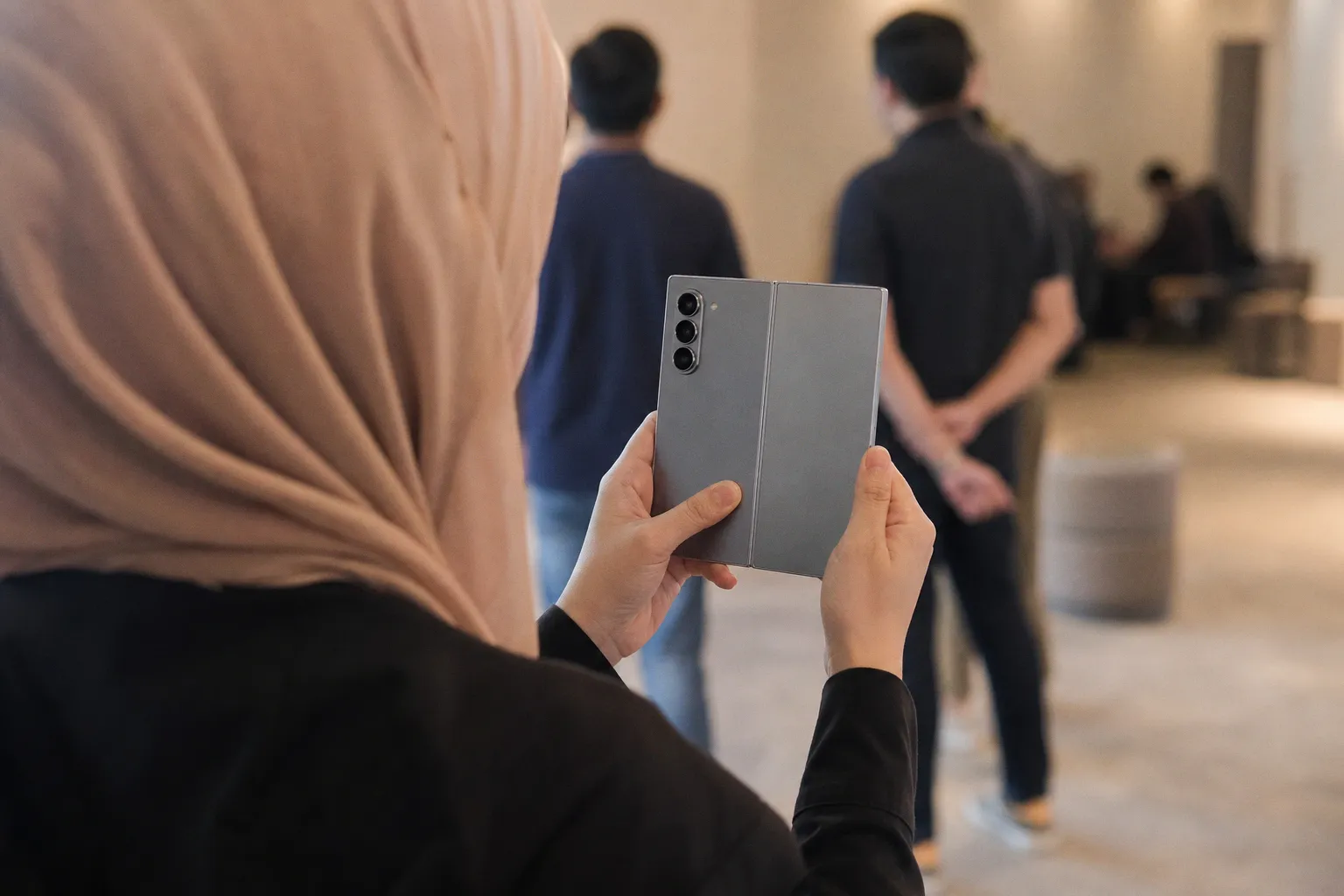
The relevant specification for newspaper and PDF readers is not panel resolution—none was provided—but geometry: the device uses a 4:3, passport-style form factor intended to work in both portrait scrolling and landscape viewing. At 4.5 mm open, 9.7 mm closed and 201 g, it is also positioned as the lightest Z Fold model.
A layout better matched to mixed reading
For e-paper platforms, the stated 4:3 aspect ratio is the primary change to assess. Conventional phone screens favor vertical feeds, while large newspaper PDFs and two-column articles often require either frequent zooming or a landscape rotation. A squarer unfolded canvas should reduce the mismatch between these two tasks: portrait for article streams, then landscape for page spreads, video embeds, or parallel windows.
CNET describes the Fold 8 as suitable for watching horizontal video, multitasking in landscape, browsing portrait-oriented apps, and reading e-books. That does not establish how well individual newspaper apps render full pages. It does, however, indicate that Samsung is targeting the intermediate space between a phone feed and a tablet page.
Readers should therefore test the actual services they use. Open a complete PDF edition, a browser-based replica page, and the native app separately. Check whether page-width mode preserves readable body text, whether columns remain stable after rotation, and whether pinch-to-zoom introduces rendering delay. A 4:3 display can improve page framing without fixing poor PDF optimization or an app’s scrolling behavior.
Hinge behavior has a practical trade-off
Samsung reportedly reduced hinge tension so the Fold 8 opens with less force and springs open. The corresponding limitation is explicit: unlike the Z Fold 7, it cannot be held partially unfolded.
That matters less for standard handheld reading than for desk use. A foldable newspaper reader is often used in two distinct positions: fully open for a page-like view, or partly folded as a self-supporting display for video, a live briefing, or a reference document. The Fold 8 appears to prioritize fast transition to its fully open state over that intermediate posture.
This should be verified before purchase by users who routinely read long editions on a table. The device’s closed profile is only 9.7 mm, according to CNET, but the relevant test is operational rather than dimensional: can a saved PDF be opened, rotated, and resumed quickly enough to replace a phone-plus-tablet routine?
The decision point is software, not the fold
CNET reports that the $1,900 Fold 8 sits between Samsung’s $1,200 Z Flip 8 and $2,100 Z Fold 8 Ultra, with preorders open ahead of an August 7 retail release. At that price level, the hardware format alone is insufficient justification for readers of digital press.
The Fold 8’s stated advantage is flexible orientation in a compact chassis. Its unresolved variable is application behavior: PDF reflow, browser memory handling, offline downloads, split-screen persistence, and rendering latency after rotation. Those should be treated as the purchase criteria.
The hardware case is clear: a 4:3 foldable is structurally more suitable for mixed scrolling and page viewing than a narrow conventional phone. The final verdict depends on whether the reader’s specific newspaper and archive apps can use that extra canvas without scaling errors, ghosted UI states, or repeated zoom correction.