Bigme Introduces 25.3-inch Color E-Ink Monitor with 60 FPS Claim
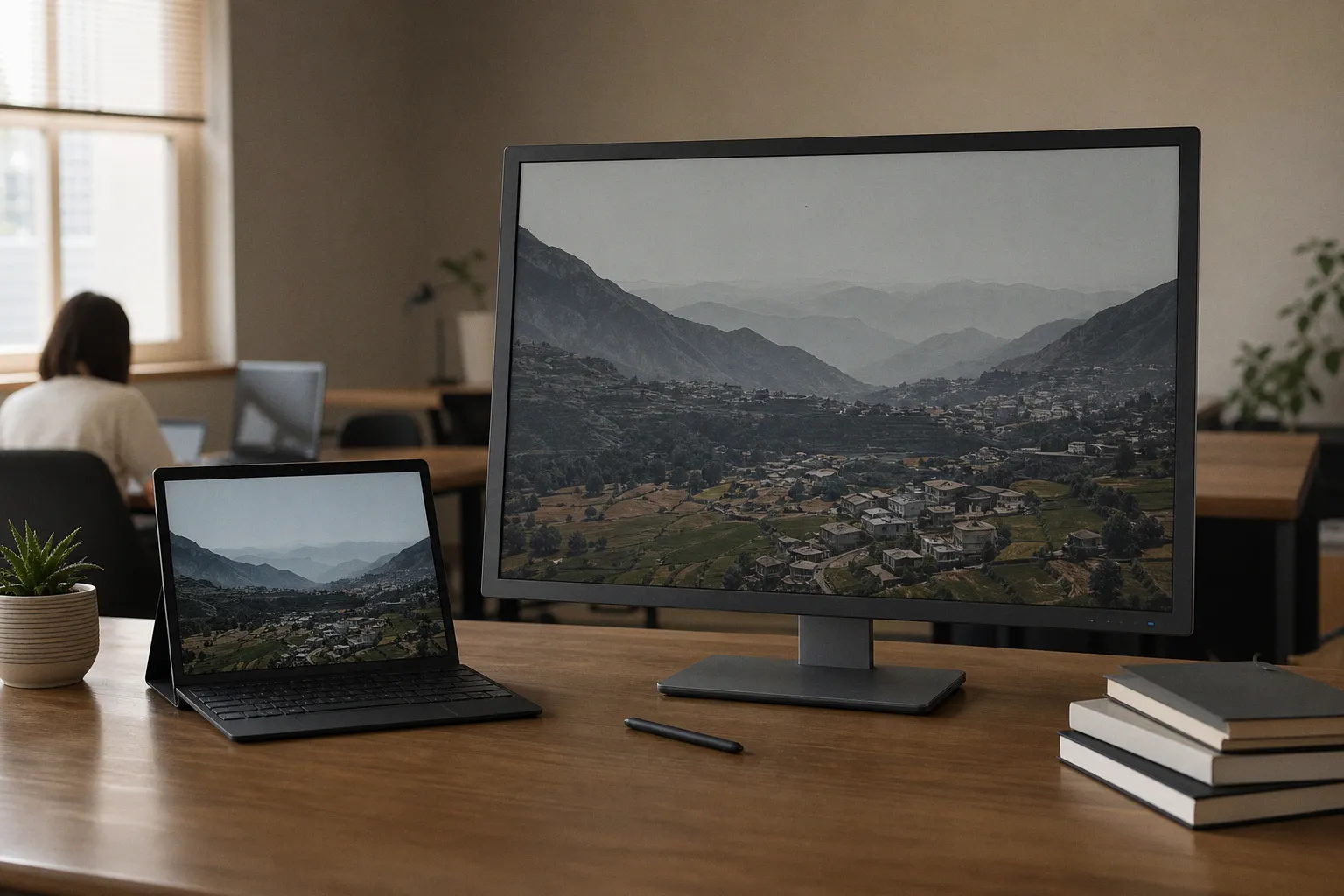
Bigme's B251 Pro pushes the e-ink refresh-rate ceiling to a claimed 60 FPS on a 25.3-inch color panel — a measurable jump from the prior 33 Hz benchmark set by earlier Dasung and Boox 25.3-inch monitors.
Refresh rate vs. response time
The B251 Pro's 60 FPS specification refers to frame output capability, not pixel transition speed. Coverage of the launch notes that e-ink panels still exhibit slow pixel response rates, visible latency, and ghosting artifacts during fast motion. In practice, this distinction matters: scrolling through a dense PDF newspaper feed at speed will likely produce residual ghosting despite the higher refresh ceiling. Readers who primarily scroll vertically through static text columns will benefit more than those switching between browser tabs, video playback, or live news feeds with animated elements.
Resolution, color, and frontlight
The 25.3-inch panel delivers 3200 x 1800 resolution, yielding 145 DPI — denser than a typical 24-inch Full HD display at roughly 92–93 PPI. Color output is capped at 4096 colors and 16 gray levels, a constraint inherent to current color e-ink stacks rather than a Bigme-specific compromise. A built-in frontlight with adjustable temperature allows use in low-light reading conditions without external illumination, and connectivity covers HDMI, DisplayPort, and wireless screen mirroring alongside a bundled remote control. For archival newspaper PDFs, the combination of high pixel density and warm-toned frontlight control directly addresses the eye-strain tradeoff that long reading sessions on emissive LCD or OLED monitors create.
What to verify before buying
Two variables remain untested outside Bigme's own specifications. First, real-world ghosting behavior at 60 FPS — whether the panel holds clean text during fast horizontal scrolls in a PDF viewer or browser. Second, firmware dithering and partial-refresh modes, which determine how aggressively the monitor clears residuals on each frame and how cleanly type renders during page turns. Independent benchmarks from display reviewers have not yet appeared, so any deployment as a primary reading monitor for daily newspaper consumption should be treated as a pilot rather than a settled replacement for a conventional display. Pricing alone — higher than many mainstream 4K options — means the unit only pays off if the reader workload is overwhelmingly text and the eye-fatigue reduction justifies the trade.