UK Newspaper Archives: What They Are and How They Work
You've finally tracked down a reference to your great-grandfather's name in a 1903 Leeds newspaper — and the link drops you on a paywall asking £7.95 to view the single page.
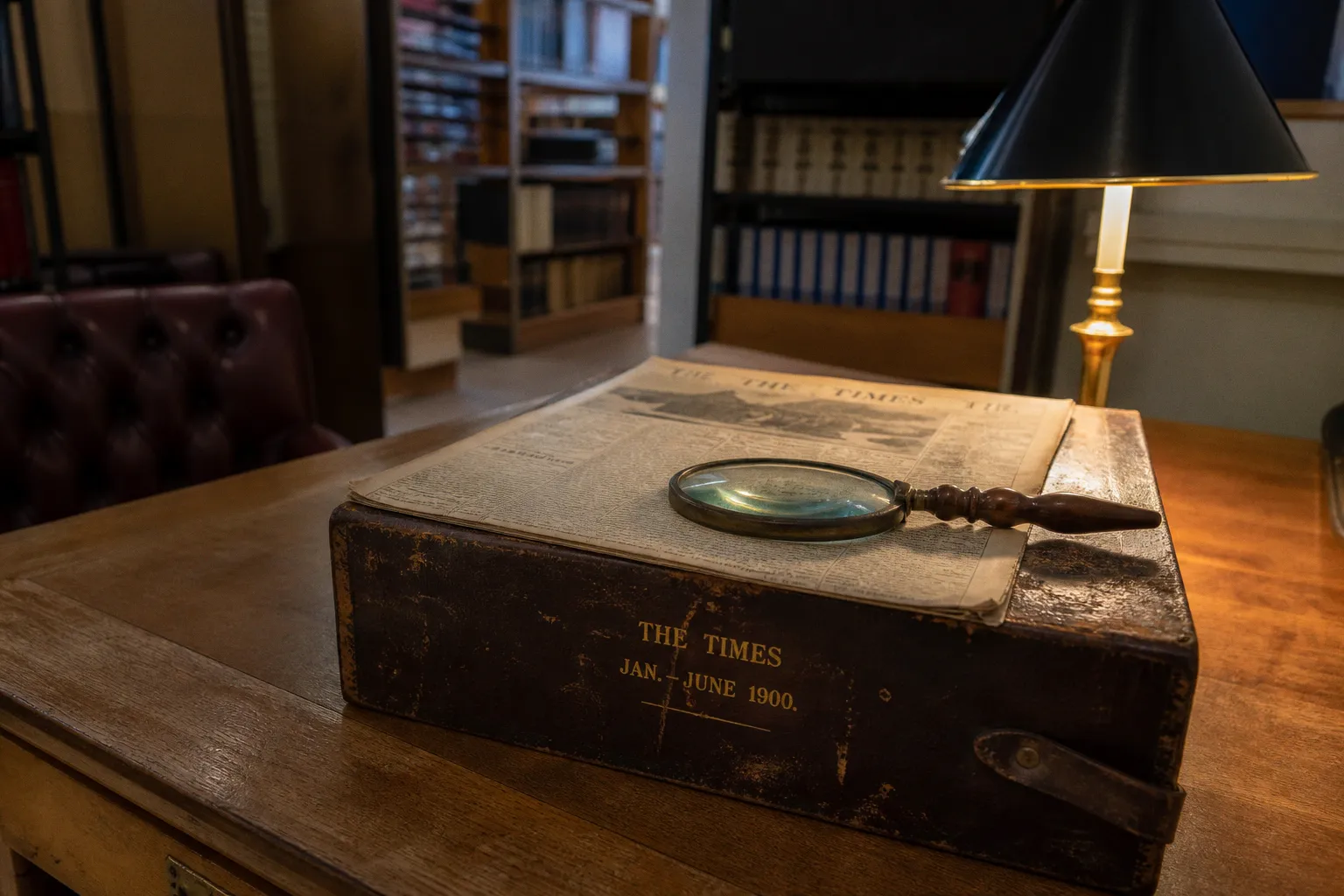
The short answer is that the British press has been digitised on a massive scale, but the access routes are scattered across national repositories, public library portals, publisher apps, and a handful of private subscription services. Each one serves a slightly different purpose, and pricing varies wildly. Below, I'll walk you through the main platforms, what they actually contain, and the most cost-effective ways to get what you need — whether you're chasing a single birth announcement or scanning a century of regional front pages.
The Scale of British Digital Press Repositories
UK newspaper digitisation is bigger than most people realise. The headline figure you'll hear most often is the British Newspaper Archive (BNA) — a partnership between the British Library and Findmypast — which currently holds more than 60 million pages of scanned historical newspapers, with new titles added every month. That collection stretches back to the early 1700s and covers regional and national titles from England, Wales, Scotland, and Ireland.
Sitting behind that is the British Library's broader News Media collection, which totals over 750 million pages and items of newspapers and magazines. A significant chunk has been digitised for remote access, but a great deal remains in physical and microfilm form at the library's St Pancras site in London. The BNA itself launched its online portal in 2011, and the project has been expanding steadily since — though not at a uniform pace. Coverage is dense for the Victorian era and early 20th century, and noticeably thinner for the late 18th century and the immediate post-war decades, which often sit in copyright limbo or simply weren't prioritised for scanning.
For international researchers, Newspapers.com also carries a growing selection of UK regional titles, often as a supplement rather than a replacement for the BNA. And platforms like the Welsh Newspapers Online archive and the Irish Newspaper Archives handle their own national collections outside the BNA umbrella. When you've exhausted one, the next step is usually checking another — coverage overlaps far less than you'd expect. That's worth remembering before you commit to a subscription.
The British Newspaper Archive isn't a single database — it's a layered system where national repositories, regional libraries, and private aggregators each hold a different slice of the historical press.
A practical way to think about the landscape: the BNA is the closest thing to a one-stop shop for British press, but treating it as exhaustive is the most common mistake genealogists and local historians make. Treat it as the spine of your search, with regional portals, library databases, and physical archives as the ribs.
Navigating the British Newspaper Archive and Library Collections
The BNA is the obvious first stop for most people, but its pricing structure is where confusion tends to set in. Access comes in three main flavours:
- Pay-per-view credits — buy a bundle of credits and spend them on individual pages. Useful if you only need a handful of results, but the per-page cost adds up fast on long research sessions.
- Subscription tiers — monthly or annual plans unlock unlimited viewing. These make sense once you've spent more than the subscription cost in credits within a billing cycle, or if you're scanning dozens of issues in a single afternoon.
- Bundled Findmypast access — because BNA is a partnership, an active Findmypast subscription often includes BNA viewing as part of the package. If you're already a Findmypast user for genealogy records, this is one of the most cost-effective routes in, and it sidesteps the credit-system entirely.
The BNA search interface itself is fairly forgiving — you can filter by date range, county, and publication title. A few practical tips that save real time:
1. Search surname variations, including common misspellings from the era. 19th-century typesetting was inconsistent, and OCR on early pages sometimes reads letters ambiguously, so "Smith" might appear as "Smyth" or "Smilh."
2. Use the date range slider to narrow broad results before refining by title, especially when searching for common surnames.
3. Use the "Browse by date" feature to flip through a specific issue when you know the approximate date but not the article — useful for confirming a paper actually ran on a given day.
4. When OCR text looks patchy, scroll through the original scan rather than trusting the typed transcription, particularly for pre-1850 pages.
5. Filter by county or region if your search term is common — results for a generic name like "John Smith" are very different by locality, and the filter can drop dozens of irrelevant hits.
If you find yourself frustrated by the paywall on a single result, you're not alone. Credit-card-gated access to individual articles is one of the most common complaints from casual users. It's also why so many researchers turn to library subscriptions before paying anything out of pocket — the same content is often available at no direct cost through a public library portal.
Accessing Regional and Local Press via Public Libraries
Here's the part most casual researchers miss: a great deal of UK newspaper archive content is available for free if you have a library card. Many UK local authorities — including most major London boroughs, Manchester, Leeds, Birmingham, Glasgow, and Edinburgh — subscribe to digital newspaper databases on behalf of their residents. Common offerings include:
| Resource | What's included | Typical access route |
|---|---|---|
| NewsBank | Regional UK titles, some international press | Library card login on council website |
| Times Digital Archive | The Times, 1785 to present | Library card login |
| Gale Primary Sources | 19th-century British newspapers, broadsides | Library card or institutional login |
| ProQuest Historical Newspapers | The Guardian, The Observer, The Irish Times | Library card or academic login |
| PressReader | Thousands of current titles from 100+ countries | Library card or institutional subscription |
The exact list depends on your local authority, so the practical step is to check your council's "e-resources" or "online reference library" page. You'll usually find a link that asks for your library card number and a PIN, then drops you straight into the search interface. Access is seamless from home once you're authenticated — no extra login credentials to juggle, and no per-article fees.
One detail worth flagging: many library subscriptions cap concurrent users, so during peak research times (genealogy season, late evenings, weekends) you may hit a "portal busy" screen. If that happens, try again at a quieter time, or call the library's reference desk for help — they sometimes reserve a slot or extend the queue.
If you have a UK library card, check your local authority's digital resources before paying for any subscription — you may already have access to the archive you need.
For researchers outside the UK, several national libraries offer cross-border access through library card registration schemes or institutional guest passes. It's not always free, but it can be considerably cheaper than a direct subscription, especially if you only need a few weeks of access. Some academic institutions also offer guest login credentials for fee-paying members of the public — worth asking university libraries in your area.
Digital Replica Editions vs. Historical Searchable Databases
There's a critical distinction worth understanding before you commit to a platform: today's digital newspaper experience comes in two different formats, and they serve very different purposes.
Digital replica editions (e-papers) are exact visual copies of the printed newspaper, page-for-page, delivered through publisher apps (like The Telegraph app, The Guardian's daily edition, or regional publisher apps) or aggregators such as PressReader. You flip through pages, you see advertisements, you get the layout exactly as it appeared in print. This is what you want if you're reading today's paper or browsing a recent back issue. PressReader in particular gives you access to thousands of titles from over 100 countries through a single interface, and many public libraries bundle PressReader access into their digital resources.
Historical searchable databases are the opposite approach: pages are scanned, processed with OCR, and indexed for keyword search. You don't browse; you search. The BNA, Gale Primary Sources, and ProQuest Historical Newspapers all work this way. These are what you want for research projects, genealogy, and tracing specific people or events across decades. The trade-off is fidelity: OCR introduces errors, especially on older or damaged pages, so the typed text is a guide rather than a transcript. Always cross-check important findings against the original scan.
A common mistake is assuming a publisher's e-paper app gives you access to historical archives. It doesn't — the app handles current and recent back issues, while historical material lives in dedicated subscription databases or library portals. If you've subscribed to a Telegraph or Guardian digital package and are wondering why your great-grandfather isn't showing up, that's why.
| Feature | Replica edition | Searchable database |
|---|---|---|
| Format | Visual page layout | Scanned page + indexed text |
| Best for | Reading current news | Research and genealogy |
| Coverage | Recent issues, often same day | Historical, often centuries deep |
| Search method | Manual page flipping | Keyword and date filters |
| Typical access | Publisher app, PressReader | BNA, Gale, ProQuest |
The two formats complement each other more than they compete. A typical research workflow might start with a keyword search in the BNA, drop you into a 1923 front page, and from there you'd want to read surrounding pages in a replica edition if the publisher has it — provided the title still runs today and the publisher has retained that older material. Most haven't, which is why BNA-style databases remain the backbone of historical work.
Limitations of Digitisation and Physical Archive Research
Not everything is online — and pretending otherwise leads to dead ends. Many local UK titles, especially from smaller towns and from earlier centuries, remain only in physical or microfilm form. Independent local historical societies occasionally run their own digitisation projects, but coverage is patchy, inconsistent, and rarely advertised widely. You often find these projects by accident, through a local studies library or a local history forum, rather than through any central listing.
If you've exhausted the BNA, your local library's databases, and Newspapers.com, the next steps usually involve:
- Microfilm collections held at the British Library, county record offices, or university libraries. These require a reader visit but cover many titles that have never been scanned, particularly 20th-century regional papers.
- The British Library's reading rooms at St Pancras and Boston Spa, where you can request physical newspaper volumes dating back centuries. St Pancras holds the main humanities collection; Boston Spa handles most storage and document supply requests.
- Local studies libraries in the relevant town or county — these often hold runs of titles that never made it into national digitisation projects, and the librarians tend to know exactly which issues exist where.
- Direct contact with publishers for very recent historical issues held in their own archives. Most national publishers will reply to a polite email, especially if you're a researcher or writer with a specific use case.
Be cautious of any service that claims full coverage of UK historical newspapers. The honest reality is that no platform has it, and the gap between what's been scanned and what physically exists is enormous. You'll save real time by starting with a clear sense of what your specific paper might be — title, town, approximate dates — before signing up for anything.
A few practicalities for working with physical archives. Plan travel around reader opening hours, which often exclude weekends and require advance registration. Bring a notebook or — if the archive allows — a camera without flash, since some older microfilm is light-sensitive. Request volumes well in advance where possible; the British Library operates a document supply service for items stored off-site, and a few days' notice can save a wasted trip. If you're chasing a single page image rather than a research trip, it's worth asking whether the library will provide a paid scan by post or email before you book travel.
Cost discipline matters here too. A daily reader ticket at the British Library is free, but travel and accommodation aren't, so weigh the marginal cost of that one missing page against a credit bundle on the BNA — sometimes the digitised record is enough, sometimes only the physical page will do, and only you know which side of that line your question sits on.
The honest bottom line: UK newspaper archives are richer than they've ever been, but they're not a single thing you can "subscribe to" and have everything. They are a patchwork, and the skill is knowing which patch to lift first, and which one to lift second when the first comes up empty.